Custom React Native App Development
We develop custom mobile applications based on your business model, target audience and functional requirements.

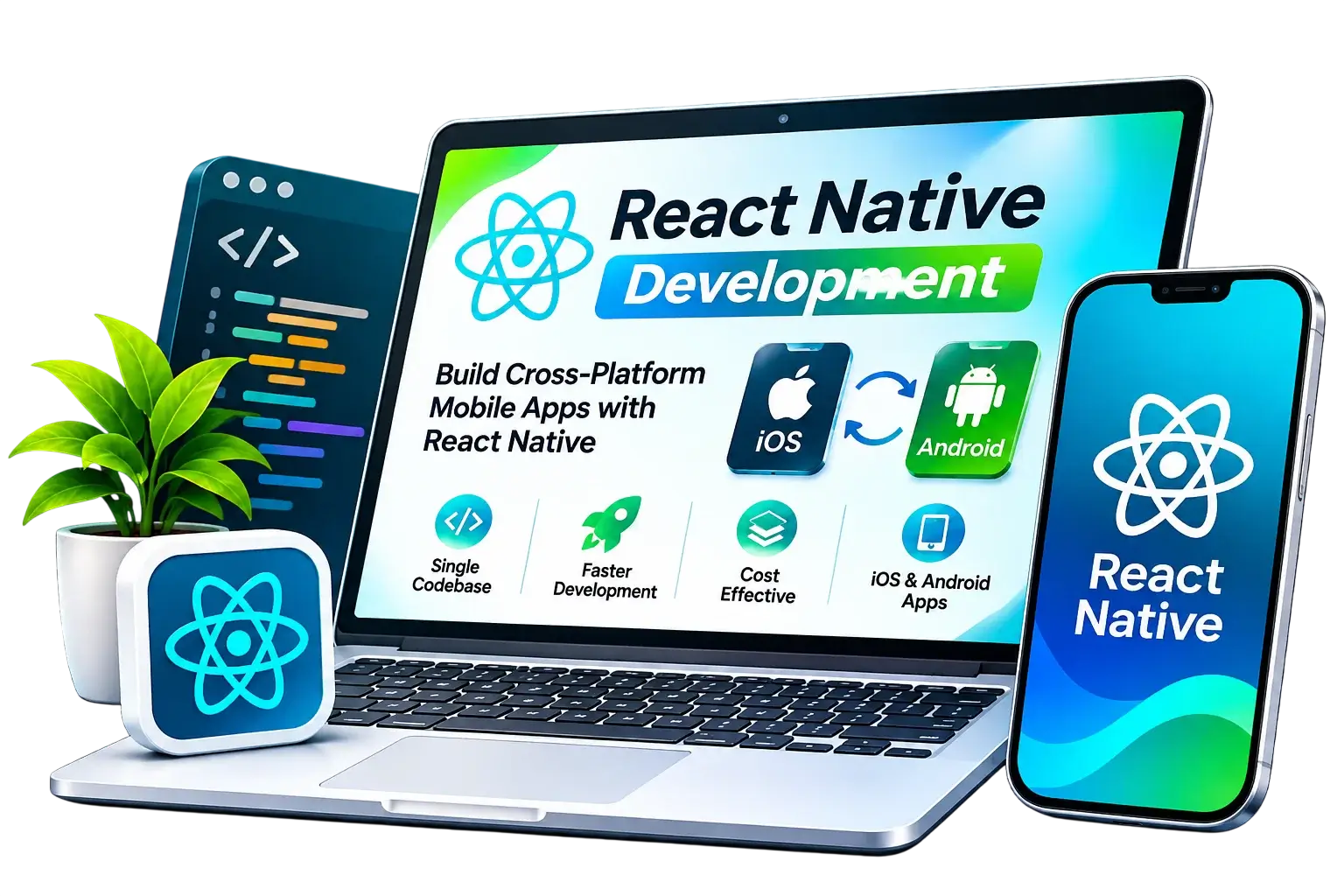
React Native is an open-source framework used to develop mobile applications for Android and iOS using JavaScript and React-based development practices.
It allows developers to reuse application logic and components across platforms while providing access to native platform capabilities where required.
React Native helps businesses build mobile applications without maintaining entirely separate codebases for every feature.
Applications developed with React Native can include:
The framework is suitable for many types of applications, although project-specific performance, device access and native functionality requirements should be evaluated before selecting the technology.
Choosing the right mobile development technology can influence your development process, maintenance requirements and long-term application strategy.

We develop custom mobile applications based on your business model, target audience and functional requirements.

Create intuitive and visually consistent mobile interfaces using reusable React Native components.
Build Android applications using React Native while considering Android device characteristics and platform requirements.
Develop iOS applications using React Native with attention to Apple’s platform conventions and supported device capabilities.
Connect your mobile application with backend systems and external services to support real-time information exchange and application functionality.
Modernise existing mobile applications or evaluate migration opportunities using React Native.

Extend application functionality by integrating suitable external tools and services.

We conduct structured testing to identify functional issues and improve application reliability across supported platforms.
Keep your React Native application updated and aligned with changing platform and business requirements.
Understand your business objectives, target users, application features, platform requirements and technical expectations.
Define the application architecture, technology requirements, backend connectivity, integrations and reusable component strategy.
Develop application wireframes, visual interfaces and interactive prototypes to establish the user experience before implementation.
Build the application using React Native, implementing core functionality, reusable components and platform-specific features where required.
Connect the application with backend systems, databases, payment gateways and other required external services.
Test application functionality, usability, compatibility and performance across supported Android and iOS environments.
Prepare application releases for Google Play and the Apple App Store, followed by maintenance and technical support according to the agreed scope.
Our development approach focuses on delivering a complete mobile application solution aligned with your project requirements.
We evaluate application quality through technical, usability and business-related indicators. The relevant KPIs depend on the application’s purpose and available monitoring tools.
App Launch Time: Time required for the application to become usable.
Crash Rate: Frequency of application crashes during usage.
App Response Time: Time taken to respond to user interactions.
API Response Time: Time taken by backend services to respond.
Application Stability: Reliability across supported devices and operating systems.
Memory Usage: Amount of device memory used by the application.
User Retention: Percentage of users returning to the application.
Feature Adoption: Usage of specific application features.
Conversion Rate: Percentage of users completing a defined action.
App Store Ratings: User feedback and ratings on application marketplaces.
| React Native App | What We Do | Business Benefits |
|---|---|---|
| Custom App Development | Build applications around business requirements. | Tailored mobile solutions. |
| React Native UI Development | Implement reusable mobile interface components. | Consistent user experience. |
| Android Development | Build React Native applications for Android. | Access to Android users. |
| iOS Development | Build React Native applications for iOS. | Access to Apple device users. |
| API Integration | Connect applications with backend systems. | Connected application functionality. |
| Third-Party Integration | Integrate external tools and services. | Extended application capabilities. |
| App Testing | Test functionality and compatibility. | Improved application reliability. |
| App Maintenance | Manage updates and technical improvements. | Ongoing application support. |
Businesses that want steady organic growth
MindEdge is a UK digital marketing agency. We combine SEO, paid ads, social, lead generation, creative and AI-powered websites to bring you customers.
React Native app development is the process of building mobile applications using React Native, an open-source framework that uses JavaScript and React-based development practices to support Android and iOS applications.
Yes. React Native supports development for both Android and iOS using a shared codebase. Some platform-specific features may require additional native implementation.
Yes. React Native can be suitable for many business applications, including e-commerce platforms, booking systems, customer portals, marketplaces and enterprise applications. Suitability depends on the application’s technical and performance requirements.
React Native primarily uses JavaScript and supports TypeScript. Developers may also use native languages such as Kotlin, Java, Swift or Objective-C when implementing platform-specific functionality.
Yes. React Native applications can integrate with REST APIs, payment gateways, authentication services, maps, CRM systems and other third-party platforms, subject to their technical requirements and access permissions.
React Native and Flutter are both popular cross-platform development technologies. React Native uses JavaScript or TypeScript and React-based practices, while Flutter uses Dart. The right choice depends on your existing technology stack, design requirements, development team and application functionality.
Yes. We can assess an existing native application and evaluate whether migrating selected features or the entire application to React Native is practical.
The development timeline depends on application complexity, number of features, UI/UX requirements, integrations, backend functionality and testing scope. A project-specific timeline can be provided after reviewing your requirements.
Yes. Maintenance support can include bug fixing, dependency updates, compatibility improvements, performance optimisation, feature enhancements and release support.
The cost depends on application complexity, number of screens, features, integrations, backend requirements and project timeline. Contact MindEdge to discuss your requirements and receive a project-specific estimate.